One of the most important protections available to condominium buyers in Florida is also one of the most overlooked. Many buyers become laser-focused on the unit itself. They evaluate the view, the floor plan, the finishes, the amenities, and whether the property fits their lifestyle. All of those things matter. However, when buying a condominium, you are purchasing much more than the four walls surrounding your unit.
You are also buying into a condominium association.
That means the financial health of the association, its reserve funding, management practices, maintenance obligations, rules and regulations, and future expenses can have just as much impact on your ownership experience as the property itself. Florida law provides buyers with certain opportunities to review condominium documents and conduct due diligence before moving forward with a purchase. Depending on the circumstances, contract terms, timing of document delivery, weekends, holidays, inspections, and other contingencies, buyers may have a meaningful window of time to investigate the community and make an informed decision. The question is not whether you should review the documents. The question is whether you know what to look for.
Don't Mistake an Offer for a Final Commitment
One misconception I occasionally encounter is the belief that buyers need to have every question answered and every document reviewed before they submit an offer on a condominium. While that may sound prudent in theory, it is often impractical in the real world.
The reality is that many of the documents buyers ultimately want to review – including financial statements, reserve studies, engineering reports, board meeting minutes, insurance information, and other association records – may not be immediately available before an offer is submitted. In some cases, gathering those materials can take days. In others, they may not be provided until the contract is in place and the formal review process begins.
That is precisely why condominium purchases include due diligence and document review periods.
These review periods are designed to allow buyers to move forward with a property they like while still maintaining the opportunity to investigate the association, review the documents, consult professionals, and determine whether the community is the right fit before becoming fully committed to the purchase.
There is also a practical negotiation consideration that buyers should understand. In a competitive situation, a buyer who insists on obtaining every document, every report, every answer, and every piece of information before even submitting an offer can sometimes create the impression that the transaction may be difficult to navigate. Fair or unfair, sellers and listing agents may perceive extensive pre-offer demands as a sign that a buyer is likely to be high-maintenance, overly cautious, or potentially difficult to satisfy throughout the transaction.
If a seller is choosing between multiple offers, they may naturally gravitate toward the buyer who appears ready to move forward while utilizing the normal contractual due diligence process that already exists to address these concerns. That doesn't mean buyers should skip their research. Far from it. Buyers should absolutely review readily available information before making an offer, including items such as association fees, rental restrictions, pet policies, age restrictions, location, amenities, and the overall condition of the property. Those factors can quickly eliminate communities that do not meet a buyer's goals.
However, the deeper investigation into reserve funding, special assessments, board discussions, engineering reports, insurance concerns, and the overall financial health of the association is often exactly what the condominium review period is intended to facilitate. The key is understanding the difference between making an offer and making a final commitment. Submitting an offer allows you to secure your position and begin the formal investigation process. The due diligence period is where you verify that the property and the community are truly what you want before moving forward to closing.
Shift Your Mindset: You're Not Just Buying a Unit
One of the biggest mistakes condominium buyers make is viewing the document review process as a legal formality. The stack of documents arrives, often hundreds of pages long, and buyers either skim them or rely on the assumption that if the building looks good, everything must be fine.
Unfortunately, appearances can be deceiving. Think of buying a condo as becoming a minority owner in a small business. The association collects money, pays expenses, maintains assets, purchases insurance, plans for future repairs, and makes decisions that directly impact your investment. The goal of your condo due diligence period is not simply to verify that the condominium exists. The goal is to understand the financial condition, operational health, and future outlook of the community.
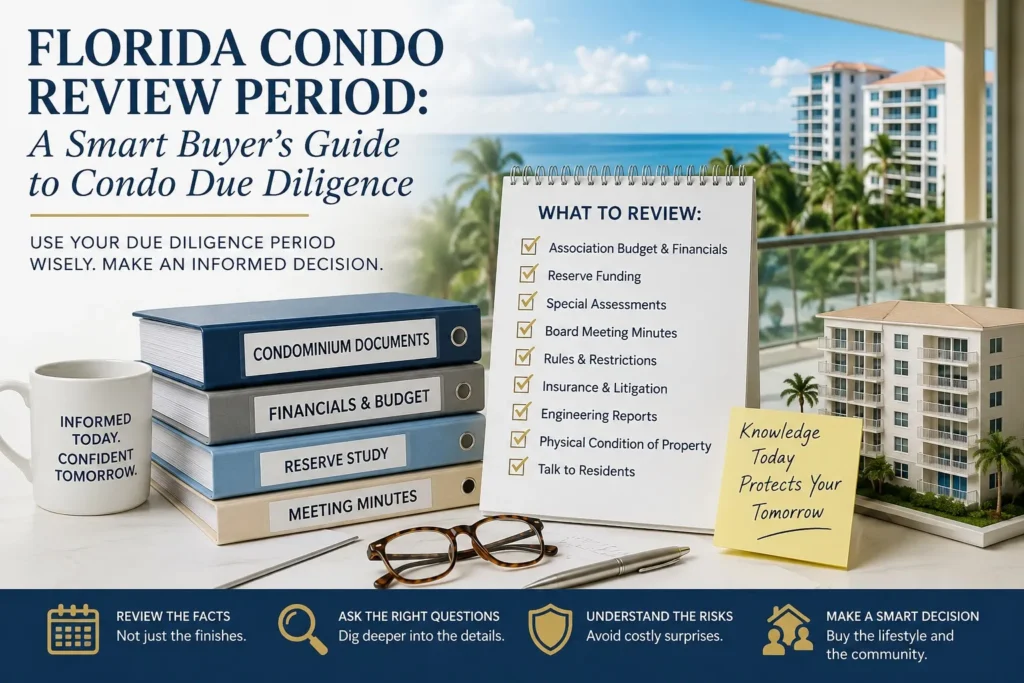
Review the Association Budget
One of the first documents every buyer should review is the condominium association budget.
The budget provides insight into how the community operates financially and can often reveal potential concerns.
Pay attention to:
- Significant year-over-year increases in fees
- Operating deficits
- Heavy reliance on special assessments
- Rapidly rising insurance costs
- Low reserve contributions
- Large expense categories that seem out of line
No budget is perfect, but a well-managed association should generally demonstrate responsible financial planning and transparency. If financial statements are available, review those as well.
Understand Reserve Funding
Reserve funding has become one of the most important topics in Florida condominium ownership.
Reserve funds are money set aside for future major expenses, including:
- Roof replacement
- Building painting
- Elevator modernization
- Paving projects
- Pool renovations
- Structural repairs
- Mechanical system replacements
When reserves are adequately funded, owners gradually contribute toward these future expenses over time. When reserves are underfunded, associations may need to impose special assessments to cover large projects.
While no one can predict every future expense, healthy reserves generally indicate a community that is planning ahead rather than reacting to emergencies.
Investigate Current and Future Special Assessments
If there is one topic that deserves extra attention, it is special assessments.
Ask questions such as:
- Are there any current special assessments?
- Have future assessments been discussed?
- Are major projects planned?
- Have engineering reports identified repairs that may require additional funding?
- Are there deferred maintenance issues that still need to be addressed?
Sometimes assessments have already been approved and disclosed. Other times, discussions may be taking place long before any official vote occurs. This is one reason why reviewing board meeting minutes can be so valuable.
Read the Board Meeting Minutes
Many buyers skip the meeting minutes. That can be a mistake. Meeting minutes often reveal information that does not appear in budgets or financial statements.
They may contain discussions regarding:
- Roof leaks
- Water intrusion
- Structural concerns
- Insurance challenges
- Contractor disputes
- Resident complaints
- Upcoming projects
- Deferred maintenance
- Potential litigation
Think of meeting minutes as the community's journal. They often reveal what board members and residents are actively concerned about.
Review the Community Rules and Restrictions
Every condominium community has its own rules, regulations, and restrictions. Before purchasing, confirm that the community aligns with your intended use of the property.
Pay close attention to:
- Pet restrictions
- Rental restrictions
- Leasing frequency limitations
- Vehicle restrictions
- Parking assignments
- Guest policies
- Renovation requirements
- Occupancy limitations
Many buyers are surprised to learn that a community may restrict rentals, limit pets, regulate renovations, or impose other requirements that affect their plans. Finding out before closing is significantly better than discovering it afterward.
Ask About Insurance and Litigation
Insurance has become a major topic for condominium associations throughout Florida.
Buyers should understand:
- What insurance the association carries
- What insurance they will need individually
- Whether there have been significant premium increases
- Whether coverage changes have occurred recently
It is also wise to determine whether the association is involved in litigation. Not every lawsuit is problematic. However, certain legal matters can impact financing, insurance availability, future expenses, or overall community stability.
Review Engineering Reports and Inspections
Depending on the age and type of building, additional reports may be available.
These could include:
- Structural inspections
- Engineering studies
- Reserve studies
- Milestone inspection reports
- Building condition assessments
These reports can provide valuable insight into deferred maintenance, anticipated repairs, and the long-term condition of the property. For older buildings, these reports can be particularly important.
Look Beyond the Documents
Documents tell part of the story. The physical condition of the property tells another.
During your due diligence period, pay close attention to:
- Common area maintenance
- Elevators
- Hallways
- Roofing
- Parking areas
- Pool facilities
- Clubhouse amenities
- Landscaping
- Exterior building condition
Often, a well-maintained property reflects proactive management and long-term planning.
Conversely, visible signs of deferred maintenance may warrant additional investigation.
Talk to Residents if Possible
One of the most valuable sources of information can be the people who already live there.
Residents often provide insight into:
- Management responsiveness
- Community culture
- Noise levels
- Maintenance quality
- Parking concerns
- Amenity usage
- Overall owner satisfaction
Individual opinions should always be taken in context, but recurring themes can be informative.
Don't Wait Until the Last Minute
Perhaps the biggest mistake buyers make is waiting until the final day of their review period to begin reviewing documents.
By then, there may not be enough time to:
- Obtain answers to questions
- Consult professionals
- Request additional information
- Review reports
- Evaluate concerns
- Make an informed decision
The smartest buyers begin reviewing documents immediately upon receipt and maintain a running list of questions as they go. That approach allows time to investigate concerns thoroughly before critical deadlines arrive.
A condominium purchase involves much more than selecting the right unit. The association's financial health, reserve funding, maintenance practices, governing documents, insurance coverage, future repair obligations, and community rules can all have a significant impact on your ownership experience and long-term investment.
The purpose of your condo due diligence period is not to look for reasons to cancel a purchase. It is to make sure you fully understand what you are buying.
Most condominium communities are well-managed and provide wonderful ownership experiences. However, taking the time to perform thorough due diligence can help you avoid surprises and make a confident, informed decision. After all, when you buy a condominium, you're not simply purchasing real estate.
You're becoming part of a community, and understanding that community is every bit as important as understanding the unit itself.
Frequently Asked Questions About Buying a Condo in Florida
What documents should I review when buying a condo in Florida?
Buyers should review the condominium declaration, bylaws, articles of incorporation, current budget, financial statements, reserve information, rules and regulations, board meeting minutes, and any available engineering or inspection reports.
What is a special assessment?
A special assessment is an additional charge imposed on unit owners to fund expenses that are not covered by the association's regular budget. Special assessments can range from a few hundred dollars to many thousands of dollars per unit.
Why are condo reserves important?
Reserve funds help associations prepare for major future expenses such as roof replacement, painting, paving, elevator modernization, and structural repairs. Adequate reserves can reduce the likelihood of future special assessments.
Should I review board meeting minutes before buying a condo?
Yes. Board meeting minutes often reveal discussions about maintenance concerns, upcoming projects, insurance challenges, resident complaints, and other issues that may not be obvious from the financial statements alone.
Can I cancel a condo purchase if I find concerns during my review period?
Certain condominium purchases in Florida may provide buyers with statutory rights to cancel within specific timeframes after receiving required documents. Buyers should consult their attorney regarding their specific rights, obligations, and deadlines.
What are the biggest red flags when buying a Florida condo?
Some common concerns include underfunded reserves, large or pending special assessments, significant deferred maintenance, ongoing litigation, rapidly increasing fees, major insurance issues, and restrictive rules that conflict with your intended use of the property.
Legal Disclaimer: This article is provided for general informational and educational purposes only and should not be considered legal, financial, accounting, insurance, engineering, or professional advice. Condominium laws, disclosure requirements, contract terms, association requirements, and buyer rights can vary based on the specific transaction and may change over time. Buyers should consult qualified legal, financial, insurance, inspection, engineering, and other appropriate professionals regarding their individual circumstances before making any real estate decisions. Information is believed accurate at the time of publication but is not guaranteed.
About Renee Hahn
Purchasing a condominium in Naples involves much more than selecting the right floor plan, location, or view. Understanding the financial health of the association, reserve funding, maintenance obligations, community rules, and future expenses is equally important when making a smart real estate decision.
If you're considering buying a condo in Naples, Pelican Bay, Park Shore, Moorings, Vanderbilt Beach, Old Naples, or elsewhere in Southwest Florida, I'd be happy to help you navigate the process and make an informed decision.
Renee Hahn, Your Naples Real Estate Expert
Ranked in the Top 1.5% in the Nation
📞 (239) 287-2576